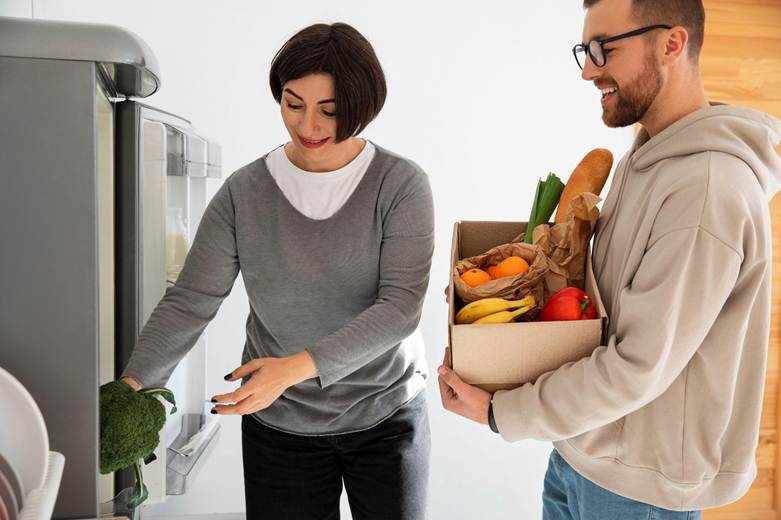
The most expensive groceries can be the ones purchased and then forgotten. Anthony Comorat discusses a practical home-cooking idea that requires no complicated meal plan: creating a dedicated “use this first’ space in the refrigerator.
The concept is simple. Instead of allowing leftovers, opened packages, aging produce, and partially used ingredients to disappear throughout the refrigerator, put foods that should be prioritized in one clearly visible location.
That shelf or container becomes the first place to look when deciding what to eat.
It sounds almost too basic to matter. Yet one of the challenges of reducing food waste is not necessarily knowing how to cook. It is remembering what is already available before buying or preparing something else.
The Refrigerator Can Hide More Than It Stores
A full refrigerator can create the illusion of abundance while making individual ingredients harder to see.
A container gets pushed behind a larger one. Half an onion disappears into a drawer. Leftover rice sits behind a carton. An opened jar is replaced by a newer one because nobody remembered the first was there.
Eventually, those foods are rediscovered when they are no longer useful.
This is partly an organization problem.
Most refrigerators are arranged according to food categories or wherever items happen to fit. That may be convenient for storage, but it does not necessarily show which foods deserve immediate attention.
A “use this first’ area adds another category: priority.
Visibility Can Influence What Gets Eaten
People are more likely to remember food they can see. That is why the location of the priority shelf matters. It should not be hidden in the lowest drawer or behind large containers. Ideally, it is somewhere visible when the refrigerator door opens.
A small bin can work just as well when dedicating an entire shelf is impractical.
The contents might include:
- Half-used vegetables
- Cooked grains
- Leftover portions of meals
- Open packages
- Fresh herbs
- Dairy products that should be used soon
- Ingredients remaining from earlier recipes
The area does not need to contain everything that could eventually spoil. It is for foods that deserve attention before newer groceries.
The System Works Best When It Stays Simple
A food organization system that requires constant maintenance can become another abandoned household project.
This one should require very little effort.
There is no need for elaborate labels, spreadsheets, or complicated inventory tracking. A simple container marked “Use First’ may be enough.
Whenever someone notices an ingredient that should be eaten relatively soon, it moves into the designated area. The shelf then becomes part of an everyday routine:
Open the refrigerator. Check priority foods. Decide whether any can be incorporated into the next meal. The easier the system is to maintain, the more likely it is to become habitual.
Small Leftovers Are Often the Easiest to Forget
A complete leftover meal is obvious. A small quantity of one ingredient is easier to ignore. Consider half a bell pepper, a few spoonfuls of cooked beans, a small portion of rice, or a handful of spinach.
None looks like dinner by itself.
Together, however, these ingredients may be enough to start one.
Egg dishes are particularly useful for small quantities of vegetables and other compatible leftovers. Cooked vegetables can move into pasta. Rice can become part of a bowl or another meal. Small portions of compatible ingredients can sometimes be combined into soup.
The goal is not to force unrelated leftovers together. It is to see small quantities as usable ingredients rather than insignificant scraps.
Let the Ingredient Choose the Meal
Meal planning usually begins with a question: What do I want to cook? A use-first shelf encourages a different one: What needs to be used? Suppose the priority area contains mushrooms, cooked rice, and part of an onion. That immediately narrows the possibilities.
The cook might add eggs or another protein and build dinner around those ingredients.
Another evening, the shelf might contain cooked chicken and vegetables. A wrap, soup, pasta dish, or bowl could provide a destination. This approach reduces the need to invent dinner from nothing.
In some cases, the forgotten ingredient becomes the starting point.
New Groceries Should Not Automatically Replace Older Ones
After grocery shopping, there is a temptation to place new products wherever space is available.
That can push older items farther from view.
A quick refrigerator check before putting groceries away can prevent this.
If there is already an open container of something, the older one can remain in front. Produce that needs to be used sooner can stay more visible than the new purchase.
The same principle is common in commercial food handling: older stock should generally be used before newer stock when appropriate.
At home, it does not need to become a formal inventory procedure.
The basic idea is simply to avoid allowing yesterday’s groceries to disappear behind today’s.
Leftovers Need a Plan, Not Just a Container
Putting leftovers into the refrigerator is only the first step. The bigger question is what happens next.A container without a purpose can easily become something that gets moved around for several days before being discarded.
When storing leftovers, it helps to consider their next use immediately.
Will the remaining chicken become tomorrow’s lunch? Could the vegetables go into eggs? Is the rice intended for another dinner?
Assigning even a loose purpose makes the food easier to remember.
The use-first shelf reinforces that intention by keeping those leftovers visible.
Portion Size Can Prevent the Shelf From Filling Too Quickly
Reducing waste also begins before leftovers exist.
Cooking far more food than the household realistically needs can create a refrigerator full of good intentions.
Sometimes extra portions are deliberate. Batch cooking can save considerable time, particularly when those portions are intended for future lunches, dinners, or freezing.
The problem is unplanned excess.
If the same dish repeatedly produces leftovers nobody wants to eat, the solution may be to prepare less next time.
A use-first shelf can reveal these patterns.
When the same kinds of leftovers repeatedly appear there, it may indicate that purchasing or cooking habits need adjustment.
The Freezer Can Rescue Food That Will Not Be Used in Time
The priority shelf should not become a waiting room for food that keeps getting postponed.
If you are unlikely to eat something suitable for freezing soon, moving it to the freezer can be more practical than hoping plans change. That may include portions of cooked meals, bread, some proteins, or other foods that freeze well.
Freezing works best when it is deliberate. Labeling containers with the contents and date makes them easier to identify later. Portions should also be sized according to how they are likely to be used.
Otherwise, the problem simply moves from an overcrowded refrigerator to a freezer filled with unidentified containers.
A Quick Weekly Check Can Prevent Surprises
Even with a priority shelf, the rest of the refrigerator deserves occasional attention.
A quick check before grocery shopping can reveal ingredients that you should move forward.
Look at:
- Produce drawers
- Open jars and containers
- Dairy products
- Leftovers
- Cooked ingredients
- Items near the back of shelves
This task does not need to become a lengthy cleaning session. The goal is simply to know what is available before adding more food. That information can also influence the shopping list. If there are already several vegetables waiting to be used, buying another large selection may not make sense.
Reducing Waste Can Make Grocery Spending More Accurate
Saving money on groceries is often discussed in terms of coupons, sales, bulk buying, and choosing lower-cost ingredients.
Those strategies can help, but they focus primarily on what happens at the store. Waste happens afterward. A discounted package that is partly discarded may be less economical than a smaller package that is completely used.
That is why reducing waste belongs in the same conversation as shopping carefully.
The true cost of groceries is affected not only by what shoppers pay but also by how much of what they purchase eventually becomes a meal.
Better Home Cooking Can Begin With Better Visibility
A “use this first’ shelf will not eliminate every piece of food waste.
Plans change. Ingredients sometimes spoil unexpectedly. People occasionally decide they simply do not want a particular leftover.
The purpose is not perfection.
It is to make usable food harder to forget. A dedicated shelf, bin, or visible section creates a reminder every time the refrigerator opens. It turns scattered leftovers and aging ingredients into a small list of priorities.
That can influence what gets cooked, what goes onto the next grocery list, and what gets frozen before it is too late. Low-cost home cooking does not always require discovering another cheap recipe or finding a better sale.
Sometimes it begins with seeing the food that has already been paid for and making sure it reaches the plate instead of the trash.